I launched an affordable, humanized email copywriting service for SMBs and startups. I thought my ideal customers were direct customers who needed help.
It turned out that my true ideal customers were other marketing agencies that needed white-label email copywriting services to meet demand.
Why your Ideal customer profile is never final
I see the creation of an ideal customer profile as a continuous process, one that begins when you start your business and continues as you encounter new demands and interests. It’s not a one-and-done process. In this article, I cover practical steps for identifying your true ideal customer.
The challenge I see with identifying key customers
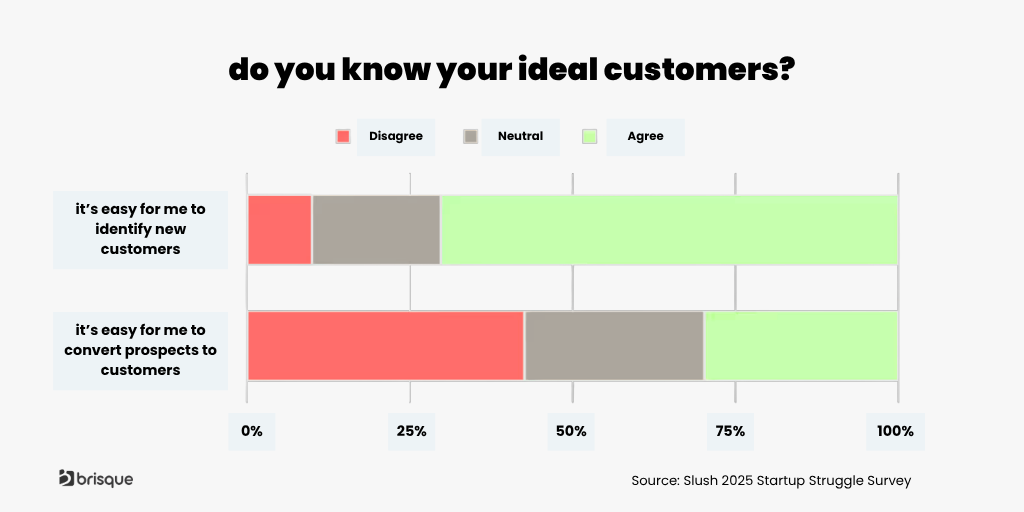
If you believe you have a sense of who your ideal customers are, but you tend to have trouble converting them into paying customers, then one of two things is broken:
- Your original assessment of your ideal customers might be incorrect.
- There’s a break in how you are communicating the value of your product.
The key to solving these challenges is intentionality.
When you are intentional about periodically assessing who you thought your ideal customers were and identifying the current leaks in your conversion process, you are more likely to see the gaps and understand where things are not lining up.
You might not have a customer demand problem
Often, it’s easy to think that when you have trouble either getting a lot of demand for your product or closing a lot of business, the problem is simply a demand problem. We tend to think that more leads equals more growth. However, getting more people interested in your product or service does not necessarily mean you’ll get more customers from that interest.
At times, the audience you anticipated would be interested in purchasing your product may not actually be the right fit. There are also instances where you are indeed addressing a significant problem, but you might be communicating with a different audience than the one that would naturally require and appreciate your solution.
How to identify your true ideal customer profile
There are two ways to determine your ideal customer profile, or ICP.
Start with a hypothesis based on one customer type
The first part of your ICP process starts with a hypothesis.
You need to understand the problem you’re solving and who might need to solve it. You want to be as specific as possible about the type of person you are speaking to, especially as you think about your first offer as a business.
As a startup, you might have several audiences you can sell to, but you want to focus on one key persona, one key customer who can quickly perceive the value of what you offer.
Those people become your test group. They let you test your concept and see whether there are people willing to pay for what you are offering.
Then, refine your ICP through real data
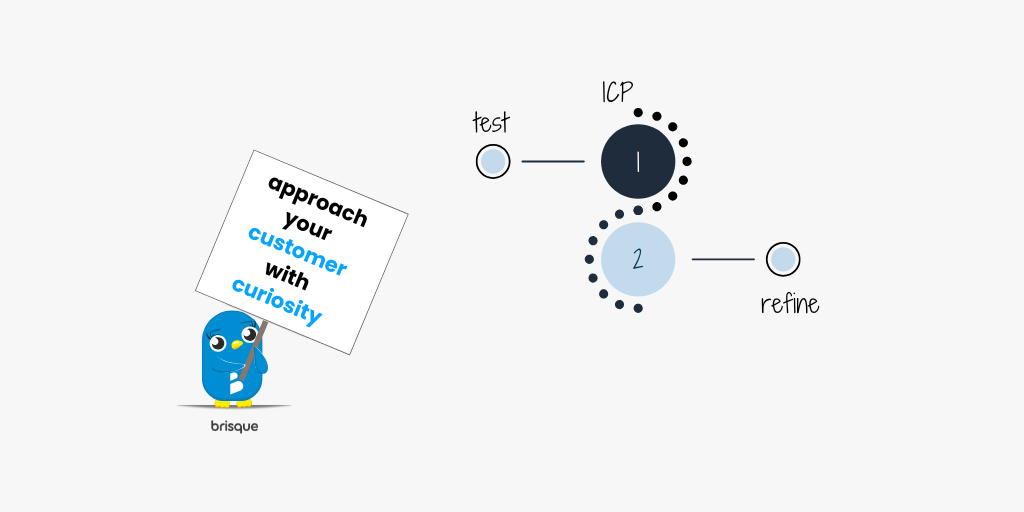
The second part of the ICP process is testing and refinement. I like to think of the process of determining your ideal customer as a science experiment.
We first develop a hypothesis about who we believe our target audience is, then test it repeatedly to see whether it is correct.
During this stage, we are essentially saying:
“We believe this group of people will buy this product in this way.”
Then we test that with our offer and observe what actually happens.
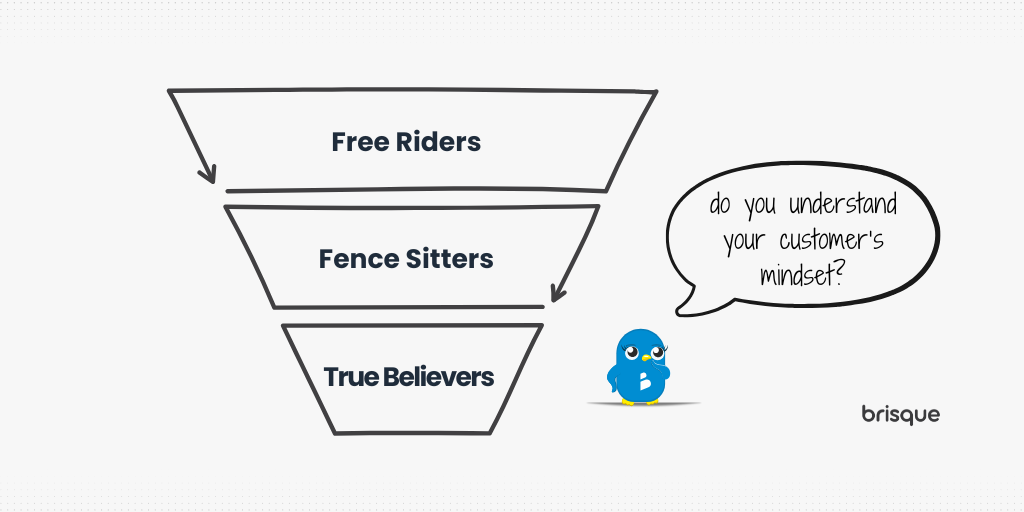
The testing mindset is important because it prevents you from entering the market under the mistaken belief that you already know everything about your customer. Instead, you approach it with curiosity. You analyze. You discover. You look for patterns in who understands your value quickly and who requires more effort.
There might be a target audience that represents your ideal or dream customer, but they may require more education. When you are getting started and looking to generate revenue, you do not want to prioritize the hardest-to-convert audience. You want to focus on the lowest-hanging fruit. The people who already understand the value, who already feel the problem, and who are easier to reach.
That is how you get real customer data and build a loyal customer base.
It is better to start where there is the least resistance and then expand from there. Take a step-by-step approach. Build from what is working instead of forcing what is not.
And as your business grows, you continue refining.
Don’t just stick to your original idea of your ideal customer.
Read next:
Refining your ICP FAQs
About the Author: Hellen Oti